
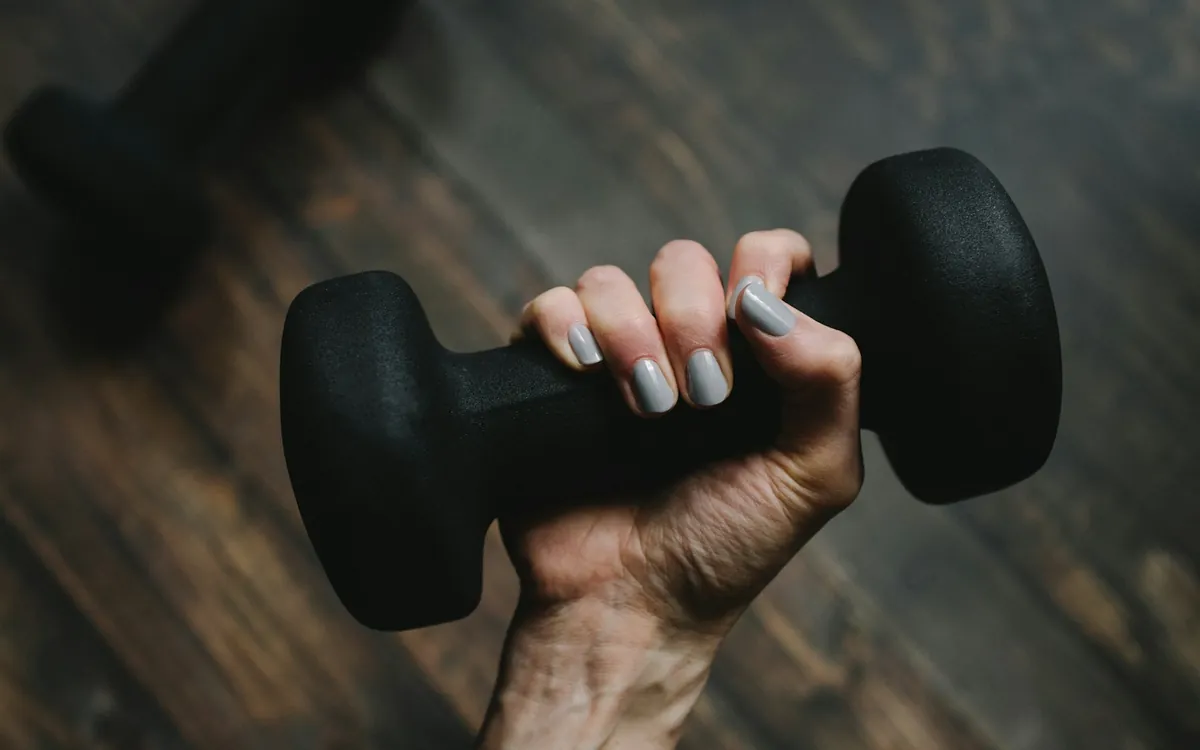
A useful starting resistance lets you learn and repeat the exercise without turning the first session into a maximum-lift test. Begin by understanding the movement and your plan's instructions. Then use a manageable practice attempt to decide whether the resistance needs to stay, become easier, or be reviewed with a qualified professional.
This process is for general education. It cannot choose a personal weight from your age, appearance, or another person's performance. An injury, exercise restriction, or uncertainty about whether an activity is appropriate needs individual guidance.
Decide what you are testing
The first question is “Can I perform the intended movement with control?” It is not “What is the most I can lift?” Mayo Clinic's technique guidance advises reducing weight or repetitions when proper form cannot be maintained and getting help when technique is uncertain.
Before choosing resistance, answer four questions:
- Which version am I doing? Write the full exercise name and equipment. Different versions need separate starting decisions.
- What does my plan ask for? Identify its repetition or time range and any effort instruction. If those are missing, clarify them.
- Can I set up and finish? Know how to enter the position, adjust the equipment, and put the resistance down. The last part matters as much as the first repetition.
- Who can check unfamiliar technique? Arrange appropriate instruction instead of assuming any nearby exerciser can assess it.
Use a stop, check, or continue decision
Stop: symptoms or a safety problem
Stop if an exercise causes pain. Seek medical guidance for severe or persistent symptoms, as discussed in AAOS exercise-safety guidance. If symptoms seem urgent, seek emergency help rather than a gym reply.
A broken adjustment, unclear safety mechanism, or uncertain exit is also a reason not to begin. Making the load lighter does not fix a problem with equipment or a movement you do not understand.
Check: the movement changes to finish the count
If you find yourself changing the intended motion just to reach the written number, end the attempt and reassess. Do not turn the remaining repetitions into a negotiation. Ask whether the load, exercise version, setup, or target needs changing. Several things can make an exercise difficult; a website cannot diagnose which applies to you.
Continue learning: the movement is understood and manageable
If the practice is controlled and fits the instructions, record the setting and what you noticed. There is no obligation to make the next attempt harder simply because the first one went well. Leave time to learn the rest of the session and to observe how the plan fits you.
Make the first attempt answer one question
Before practicing, write the uncertainty you are trying to resolve. Is the exercise unfamiliar? Is the equipment adjustment unclear? Or is the movement understood and only the starting resistance undecided? These questions need different help. Repeatedly changing the weight does not explain an unknown control or teach the correct exit.
You can schedule a Gym of Foley tour to identify the equipment and ask how instruction is arranged. If you want coaching, confirm the appointment, provider, scope, and price separately. Personal training is available, but a tour should not be assumed to include a full technique assessment.
Compare three possible next decisions
The resistance should be easier
In a fictional example, the instructor has explained the movement, but the person cannot follow its intended form with the attempted resistance. They stop the attempt and ask about an easier appropriate option. The decision comes from what happened during the movement, not embarrassment about the number on the equipment.
The resistance can stay the same while learning continues
Another fictional person completes the assigned practice with the agreed control and stopping cue. They record the setting and continue according to the plan. A successful learning attempt does not require an immediate increase. The person still has other exercises and setup details to understand.
The attempt should stop until something is clarified
A third person knows the exercise name but cannot explain how to secure an adjustment. A lighter setting does not settle that problem. They leave the device unused and ask for appropriate instruction. If the obstacle is pain or another symptom, the next contact may need to be a healthcare professional rather than an equipment instructor.
These examples are decision patterns, not a sequence of tests to perform. None supplies a universal load, target count, or medical assessment.
Record enough detail to find the same starting point
“Used a light weight” is difficult to reproduce. A more useful note identifies the exercise version, the device or implement, the displayed unit, and the setting used. Include setup details confirmed with the instructor and whether the entry refers to practice or work sets.
If a dumbbell number refers to each hand, say so. If a machine has a numbered stack without a clear unit, do not convert the number into pounds. If you move to another machine, treat it as a separate setup and resistance decision rather than assuming identical labels mean identical effort.
The fitness planner may provide a general routine to discuss within its displayed limits. It cannot see your movement, select a verified personal starting weight, or override an injury-related restriction. Keep technique and health questions with the appropriate professional.
Ask for an instruction you can repeat
- Which setup details should I check each time?
- What should one completed repetition look like for this version?
- What change in movement means I should end the set?
- How should I choose the initial resistance under this plan?
- What is the easier option if the smallest available setting is still too demanding?
- Does this exercise need supervision, a spotter, or a safety setup I have not learned?
Write down the exercise, device or equipment version, setting, completed work, and the question that remains. That note is more useful than “light” or “heavy,” which may mean something different next week.
After you have a repeatable starting point, read how to decide between more repetitions and more weight. If abbreviations are the obstacle, begin with sets, reps, and workout instructions.
Starting resistance FAQ
Should I copy a friend's weight?
No shared number can establish that you understand the exercise or that the task fits your plan. Your friend's setting can be a conversation detail, not your starting instruction.
What if the smallest available resistance is too much?
Stop and ask about another appropriate exercise version or piece of equipment. Do not improvise equipment modifications to force the planned exercise to fit.
Should I test my maximum so I know where to start?
This beginner decision process does not require a maximum-lift test. Ask for a starting method matched to your experience and plan rather than treating a maximal attempt as an entry requirement.
What should I bring to the next session?
Bring the exact setup note, what you completed, and the unresolved question. That gives your instructor something specific to review instead of asking you to reconstruct the whole experience from memory.
Take the next practical step
Ask about equipment and instruction during a Gym of Foley tour.
Explore general starting guidance in the fitness planner. Its general education is subject to the displayed limits and does not replace individualized medical advice or exercise instruction.