
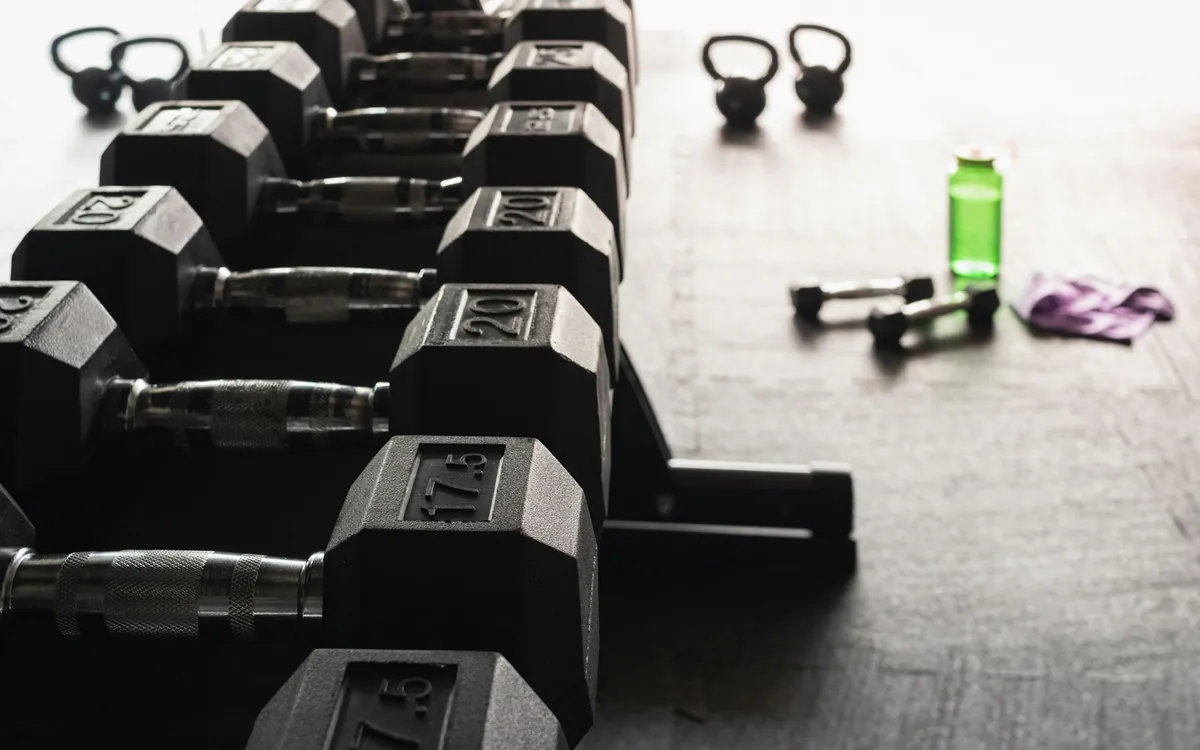
Rest between strength sets is part of the session, not empty time you must eliminate. Use your plan's rest instruction as a starting point, then check whether you can begin the next set with the required attention, setup, and control. If you are not ready, do not treat the timer as a command.
This worksheet helps you understand and record the pauses in your existing plan. Ask the person who designed the program to clarify its rest instructions rather than replacing them with a universal timer rule.
Identify what the timer measures
A written pause may be between sets of the same exercise, between different exercises, or after a sequence. Those instructions are not interchangeable. If the plan says only “rest 90 seconds,” ask where that interval belongs before deciding the workout is taking too long.
For example, three straight work sets have two between-set gaps. There may also be preparation before the first set and a transition after the third. Combining all of these into one number hides where the time actually goes.
Use four checks before restarting
- Symptoms: Is there pain, dizziness, or anything concerning? A symptom is a reason to stop and assess, not merely extend the timer.
- Attention: Can you focus on the movement and the stopping instruction? Put the phone conversation or distracting task aside.
- Setup: Is the equipment ready, with the intended resistance and any necessary safety arrangements in place?
- Task: Do you feel able to attempt the assigned work with control? If not, wait or review the assignment instead of forcing it.
This checklist is a planning aid, not a test that certifies exercise safety. Mayo Clinic advises controlled movement and stopping an exercise that causes pain. Severe or urgent symptoms require medical help.
Distinguish recovery time from equipment time
Your log might show three minutes between two sets, but those minutes could contain several activities: resting, moving equipment, checking instructions, or responding to a message. Record a brief reason when the distinction affects how you interpret the workout.
For example, “pause extended because the adjustment needed clarification” tells the program designer something different from “followed the rest instruction but still felt unready.” Both deserve an accurate note. Neither should be hidden by editing the timer entry to match the planned number.
If unfamiliar setup repeatedly consumes your session, book a Gym of Foley tour to ask about the equipment and how instruction can be arranged. Learn the facility's sharing rules as well. A timer does not reserve a station or override the posted etiquette.
Check the arithmetic of straight sets and paired work
Fictional planning example: Four straight sets of the same exercise have three gaps between those sets. At an example ninety seconds per gap, the three pauses total 270 seconds, or four and a half minutes. The lifting, setup, and transition to another exercise require additional time. Ninety seconds here is an arithmetic input, not a recommendation.
Now consider a program that pairs two exercises. Time spent on the second exercise is not an empty pause in the overall session, even if it separates sets of the first. Follow the program's specified sequence and rests; do not label every non-A1 minute “rest” and conclude that the instructions match.
If the wording is unclear, ask the author to write out one complete round. That can resolve a schedule problem more effectively than buying a more complicated timer.
What to do when the session does not fit the available time
First identify the cause: the calendar omitted rest, the exercise instructions were unclear, equipment was unavailable, or a personal interruption occurred. Each suggests a different planning fix. Reducing every pause without reviewing the rest of the assignment can obscure the original problem.
Ask about an appropriately shortened session, a different calendar window, or better preparation for the same assignment. Do not turn a time limit into a demand to finish every planned set regardless of control or symptoms.
The fitness planner offers general educational structure within its displayed limits. It cannot assess your readiness between sets, diagnose breathlessness or dizziness, or choose an individually optimal rest interval. Keep symptom questions with a healthcare professional and program details with the person qualified to review your training.
Use one session audit instead of watching every second
For a review session, note when you arrived, when the first work set began, where unexpected delays occurred, and when you finished. Keep the notes brief enough that logging does not become the main activity. A rough, honest explanation is more useful than a precise timer with no context.
At the next review, ask which difference is worth addressing. If unclear instructions consumed most of the extra time, resolving those instructions may be the relevant next step. If the plan simply requires more time than you have, the assignment or schedule needs reconsideration.
A fictional timer example
Alex's program includes two work sets and a suggested pause. Alex starts a timer after the first set. When it sounds, Alex is still distracted by a phone message and has not checked the setting for the next set.
The sensible next action is to complete the readiness check. Starting immediately would make the timer more important than the task. Alex records that the actual pause was longer and asks the program designer whether the session timing needs revision.
Compare that with repeatedly extending every pause because the workout is unclear. In that case, the issue may be missing instructions. Alex could arrive with the exercise order and setup notes ready, reducing avoidable confusion without removing useful rest.
Audit the session rather than rushing it
Fictional arithmetic: A short section has three exercises with two work sets each. When each exercise is completed as straight sets, that creates three within-exercise rest gaps: one for each exercise. At an example two minutes per gap, those gaps total six minutes. Preparation, exercise time, and transitions are additional.
If a ten-minute calendar block was supposed to contain the whole section, the problem may be the calendar estimate. Compressing every pause is not the only option. Review the planned work, allow a more realistic block, or ask the program designer how to shorten the session appropriately.
Keep a small rest record
You do not need to time every second forever. A few clear observations can make a useful conversation:
- Exercise and set: _____
- Planned pause and where it applies: _____
- Approximate actual pause: _____
- Reason it differed: needed more preparation / distraction / unclear instruction / other
- What happened in the following set: _____
- Question for the plan's author: _____
Keep other variables stable when possible. A heavier resistance, a different exercise order, or an unfamiliar device can change the session as well. One difficult set cannot tell you that rest alone was the cause.
Ask the gym about shared-equipment etiquette if you are unsure how to handle a pause around others. Do not assume that you must abandon preparation to finish faster, or that leaving personal items reserves equipment under every facility's rules.
For the written notation, see reading sets and workout instructions. For the next-session decision, use our progression guide.
Rest between sets FAQ
Should I restart as soon as the timer sounds?
Only follow the next set when the task and setup are understood and you are appropriately ready. The timer cannot assess symptoms or movement control.
Is a longer pause a failed workout?
An actual pause is information to record and review. Its meaning depends on the plan and the reason it changed, not a universal judgment.
Can I fill every pause with another exercise?
That changes the session. Ask whether the activity belongs in the program rather than assuming that all pauses are available for extra work.
Take the next practical step
Learn the facility and sharing rules during a Gym of Foley tour.
Review general session structure in the fitness planner. Its general education is subject to the displayed limits and does not replace individualized medical advice or exercise instruction.