
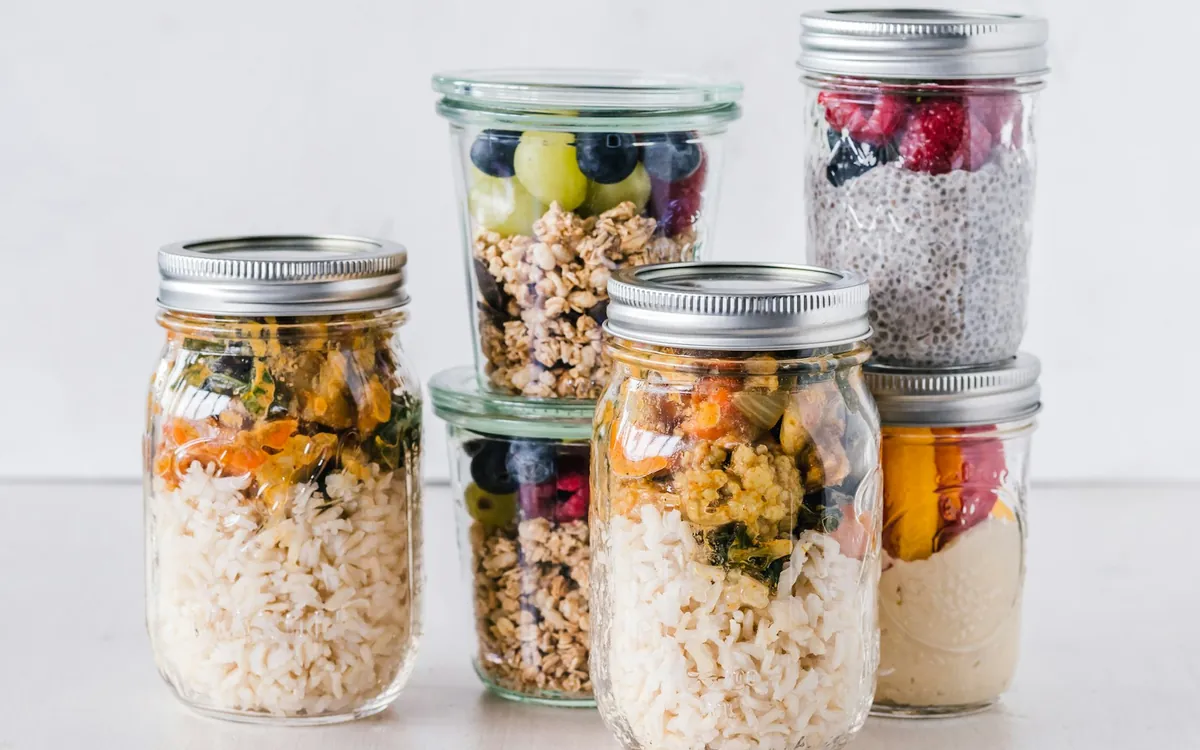
When you pack food for a work-and-gym day, plan for every stop between the kitchen and the moment you eat. A lunch stored at work and a snack saved for after exercise may have very different storage needs. The gym visit is one more part of the timeline, not a reason to leave the food plan unfinished.
Start with the storage instructions on each package or food item. This guide covers handling logistics; it does not prescribe a meal, a calorie target, or what anyone should eat around a workout.
Choose the storage plan before the menu
FoodSafety.gov's packed-meal guidance recommends an insulated bag and two cold sources, such as frozen packs, for perishable food. Cold food needs to stay at 40°F or below. Two cold packs are a packing method, not a promise that any bag will remain cold through a full workday and evening workout.
FoodSafety.gov also advises using an appliance thermometer in a cooler to check that it is maintaining the appropriate temperature. See its cooler guidance. Confirm whether you have suitable refrigeration at work; do not assume there is food storage available at the gym.
Fill in a food-travel worksheet
Make one line for each item you want to pack. Write the answers before the day begins, then revise them if your schedule changes.
- Item: What am I taking, and what do its storage instructions require?
- Planned eating time: Is it for lunch, the journey, or later in the evening?
- At home: Where will it stay until I leave?
- At work: Is the intended refrigerator available, or do I need a properly maintained cooler?
- During travel and exercise: How will the item stay safely stored through these parts of the day?
- If delayed: What will I do if a meeting runs late or the workout plan changes?
The most useful blank is often the one between leaving work and arriving home. If you cannot fill it with a reliable storage plan, change what you pack or when you expect to eat. Do not write “probably fine” as the storage method.
Map the full day, including the trip after work
A food timeline needs a storage method beside every location. Consider a fictional day that includes leaving home, a work refrigerator, a drive across Foley, a workout, and a stop on the way home. “It was in the refrigerator at work” answers only one part of that day. The item still needs an appropriate plan when it leaves that refrigerator.
Use two separate columns in your own note: intended storage and confirmed storage. The intended column might say “work fridge.” The confirmed column should reflect whether that refrigerator is accessible and operating appropriately. If the plan changes, update the food decision at that point rather than assuming the morning's plan remains valid.
If you are still choosing your workout window, the fitness planner can help organize general exercise ideas within its displayed limits. It does not assess food safety or provide individualized medical nutrition advice. Keep your storage timeline beside your calendar so a longer visit does not quietly extend an unsupported storage gap.
A delayed-workday decision, step by step
In this fictional example, a refrigerated snack is removed from suitable cold storage at 4 p.m. The person then discovers that the intended cooler is unavailable. At 6:30 p.m., the snack has remained at ordinary room temperature the whole time. That is two and a half hours outside appropriate cold storage, exceeding the two-hour limit in FoodSafety.gov's storage guidance. The decision is to discard it, even if the package seems cool to the touch or the food smells normal.
This example assumes ordinary room temperature, not a hot car. When the air temperature is above 90°F, the shorter one-hour limit applies. Do not use this example to certify a complicated real-life storage history, and do not assume that putting food back in a refrigerator makes an earlier unsafe interval disappear.
A more useful next-day change is to prevent the gap: arrange verified suitable cold storage for the whole journey, select an item whose label allows the storage you can actually provide, or obtain food later. Buying a replacement can be inconvenient, but eating questionable food does not recover the original purchase.
What to check before making gym storage part of the plan
Arrange a tour of Gym of Foley if you need to understand the visit logistics. Ask about the rules for bags, food, and drinks rather than arriving with a cooler and assuming there is somewhere to keep it. This article does not establish that the gym provides refrigeration or a food-preparation area.
- Will the same bag stay with me through every stop?
- Does any item require refrigeration after opening?
- Can I verify the temperature where the food will actually be stored?
- What changes if the workout or journey takes longer than planned?
Know when the food plan has failed
FDA storage guidance says perishables should not sit at room temperature for more than two hours, or one hour when air temperature exceeds 90°F. Food can be unsafe even when it looks, smells, or tastes normal. Follow package storage directions, and discard food that has not been kept safely rather than taste-testing it.
Those limits are a reason to prevent uncontrolled storage gaps. They are not a target for how long to keep lunch in a car. If you cannot establish that an item was safely stored, replace it with something you can obtain and handle safely.
Reset the bag for tomorrow
When you get home, review what was eaten, what needs appropriate storage or disposal, and what equipment needs cleaning or preparing. Put “freeze cold packs” or “check cooler thermometer” on tomorrow's packing note if relevant. Keep food planning separate from whether the workout happened; the food still needs attention when a gym trip is canceled.
Common packed-food questions
Are two cold packs enough for an entire workday?
They are a packing recommendation, not a guaranteed duration. The relevant question is whether the food stays at its required temperature through your actual day.
Can smell settle an uncertain storage history?
No. The FDA cautions that food may be unsafe without looking, smelling, or tasting spoiled. Do not taste-test it to decide.
Should I pack the same snack every day?
This guide does not select foods or prescribe workout nutrition. Start with the storage requirements of the particular item and the facilities available that day. Food preferences and individual nutrition needs are separate decisions.
Take the next practical step
Confirm your visit logistics with a Gym of Foley tour.
Organize your exercise schedule with the fitness planner. Its general education is subject to the displayed limits and does not replace individualized medical advice or exercise instruction.